19 November 2026
From design system to ads that keep learning
A campaign doesn't have to stay stuck with the creative it launched with. With modular brand rules and AI, new ad variants can follow what works more quickly — and move almost in real time with audience, channel and results.
A fixed set of creatives ages faster than you think
The classic approach: an agency delivers five banners and two videos. The campaign goes live and that set runs until the next briefing. After a few weeks, your target audience sees the same message for the tenth time, performance drops, and a new set is slow to arrive. The problem is not the creative itself, but that it was produced as a static end product.
A modular design system flips that around. Instead of finished adverts, you define building blocks that you can combine endlessly without diluting your brand.
The building blocks you define
Think of a limited number of layouts per format, with fixed placements for logo, headline, and CTA. A copy bank with brand messages, proof points, and opening lines per target audience. An image library with guidelines on cropping, colour, and dos and don'ts. CTAs for each step in the customer journey. And for each placement, the channel's rules: ratios, character limits, safe zones.
The more tightly those building blocks are described, the better AI can work with them. You're no longer asking for a creative ad, but for a variant within clear limits: this layout, this audience, this proof point, this format.
AI makes variants, performance steers the next ones
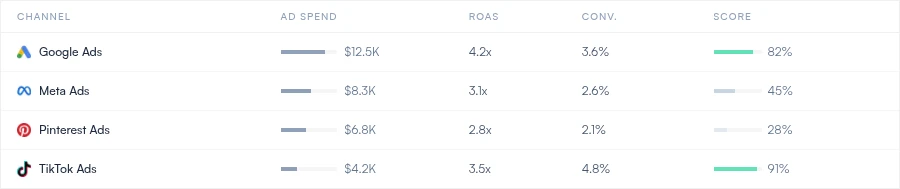
With these rules in place, AI can quickly prepare dozens of controlled variations: a different opening line for installers than for private individuals, a shorter headline for Stories, a different image for LinkedIn. Each variant carries labels, so afterwards you know exactly which combination of message, visual and target audience delivers results.
That is where the learning part lies. What resonates forms the basis for the next round; what doesn't work is dropped. Instead of a new set every quarter, the campaign shifts step by step towards what works for that target audience in that specific channel.
Conceptual model · n8n-style
The unfair advantage of AI-driven ads is the learning loop.
AI proposes variants; tests determine what earns more investment. This conceptual diagram illustrates the approach, not an exact deployed workflow.
Public market signals
Competitors’ public ads and organic activity, plus market signals. No access to their conversion results.
Own campaign and CRM data
The brand’s own best-performing ads, qualified leads and sales-quality outcomes from its CRM.
Kryptonite design system
Brand rules, copy, approved images and format templates define the creative boundaries.
AI creates candidates
Combines signals and brand building blocks into new, labelled ad variants.
Human approval
Review of brand fit, messaging and quality before a variant goes live.
Test on paid channels
Test approved variants on channels relevant to the audience and objective.
Measure real outcomes
Results by creative and qualified lead or sales outcome inform the next round.
Public ads reveal competitors’ creative and messaging, not their sales results. Performance feedback in this learning loop comes from the brand’s own campaigns and CRM. That means optimising not just for attention, but also for enquiry quality and sales.
Fast adjustment needs enough data
Adapting almost in real time sounds appealing, but it only works when sufficient actionable campaign data is coming in. With a modest budget or a narrow B2B target audience, it takes longer before a difference becomes statistically meaningful. In such cases, it is wiser to test fewer variants concurrently. Optimising on too little data is simply chasing noise.
People guard brand, quality and choices
AI does not predict winners; it speeds up creation and testing. Someone still needs to decide which messages the brand wants to convey, which variants meet the quality threshold, and when a well-performing ad simply does not fit on substance. At Kryptonite, we help build the design system, set up tags and tracking points, and put those decisions in the hands of people who know the brand and the customer.
Examples of tools in this space
Market examples from our GTM and R&D research, not a list of tools Kryptonite has deployed for clients. Descriptions are based on the official product pages.
Fastlane (opens in a new tab)
Combines brand, market and competitor research with creative generation. Uses results from connected first-party campaigns to inform the next variants.
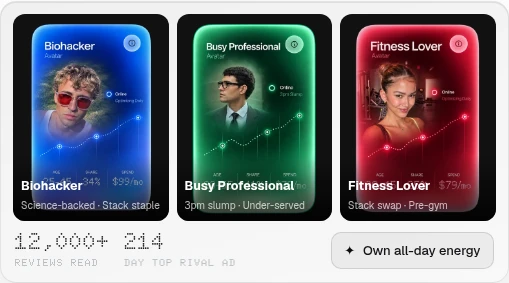

Plai (opens in a new tab)
Its Optimize for Me feature tests and adjusts creatives, targeting and placements against the campaign objective. Shifts budget towards better-performing variants.
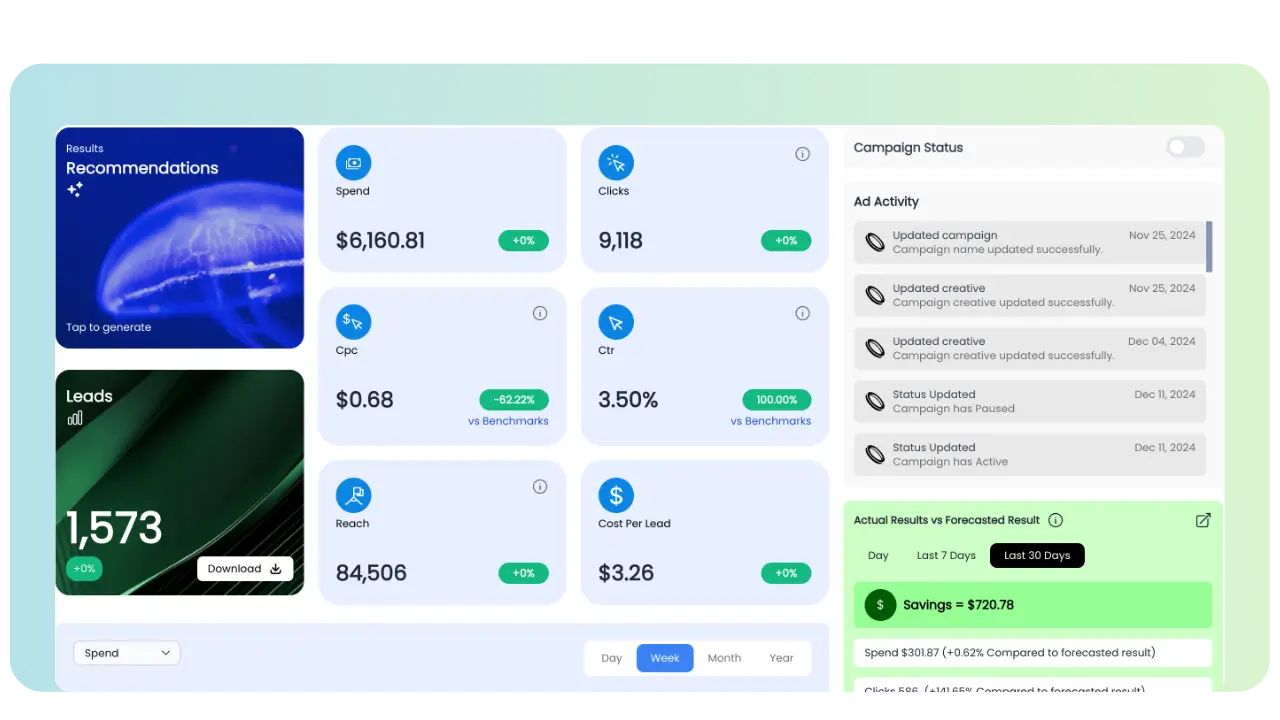

Ryze AI (opens in a new tab)
Offers paid-ad monitoring and optimisation across major platforms, including Google, Meta, TikTok and LinkedIn.